

The studio is growing. Projects are accelerating. An investor, new shareholder or next title is on the horizon.
Yet the legal and business structure may still rely on informal arrangements that were once sufficient but now create risk.
A disorganised structure can slow down an investment round, complicate discussions with a partner, trigger conflict between founders or undermine the studio’s credibility during due diligence.
Our role is to translate the studio’s business objectives – growth, financing, future titles and expansion – into a corporate model that works in practice: clear, secure and understandable to the management board, founders and investors. The service includes, among other things, a structural audit, selection of the appropriate corporate model, structuring relationships between founders and investors, and preparing corporate and investment documentation.
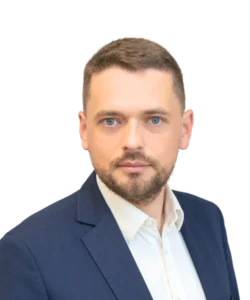
Mateusz Sawaryn
Managing Partner Counsel
Our solution
From informal arrangements to a structure ready for growth and investment
We do not start with documents. We start by understanding how the studio operates, what it aims to achieve and where its structure may block decisions, financing or scaling. Only then do we design a practical, implementable model that makes sense for the business.
Audit of the ownership and organisational structure
- analysis of the current company or project-team structure,
- review of relationships between founders, shareholders and key people,
- identification of decision-making, ownership and investment risks,
- verification of documents and informal arrangements.
Designing the optimal company model
- selection of the legal form and operating model,
- recommendation of a structure for the current stage of growth,
- allowance for investment plans, subsequent projects and scaling,
- organising roles, responsibilities and decision flow.
Preparing the studio for investors
- organising corporate and investment documents,
- preparing the structure for an equity investment,
- support during investor negotiations,
- analysing risks that may arise during due diligence.
Przygotowanie studia do inwestora
- defining who makes which decisions and within what scope,
- designing oversight, consent and authority mechanisms,
- clarifying the responsibilities of the management board and shareholders,
- adapting the rules to the scale of the organisation.
Governance, kontrola i zasady decyzyjne
- analysing relationships between projects, rights and entities,
- recommending how to organise several titles or business lines,
- supporting the funding model for future projects,
- organising key dependencies from an investor’s perspective.
Who this service is for
For studios that want to grow without improvising their structure
The service is for teams with a clear business objective: securing an investor, scaling up, launching a new project, changing the shareholder structure or putting their operating rules in order.

For studios that want to grow without improvising their structure
The service is for teams with a clear business objective: securing an investor, scaling up, launching a new project, changing the shareholder structure or putting their operating rules in order.
Gaming studio CEO / COO
When you need clear decision-making rules, accountability and control over the company’s growth.
Studio founder / creative director / co-founder
When you want to protect your shareholding, rights and influence over the project without limiting the business’s flexibility.
Stages of work
A straightforward process from diagnosis to implementation
We work so that the management board and founders can quickly see where the risks lie, what options are available and what must be implemented first. The process covers diagnosis, structure design, implementation and ongoing support with investors and structural changes.
Situation assessment
We analyze the studio’s structure, documents, founder relationships, decision-making model, rights and business objectives.
Structure design
We develop a recommended legal and business model covering the company, ownership relationships, governance, investment scenarios and control rules.
Implementation
We prepare, organize or update corporate and investment documents. We set rules between the parties so the structure works in practice.
Stabilization and ongoing support
We support the studio through further changes, including investor discussions, growth, new projects, shareholder changes or changes to the funding model.
Contact us
Check whether your studio's structure is ready for an investor
One conversation will identify where the greatest risks sit: in shares, decision-making, documents, IP, founder relationships or the model for investor entry.
Fill in a short form. We will ask about the studio’s stage of growth, ownership structure, investment plans and the most important challenges. On that basis we will come back with a proposal for the next step.
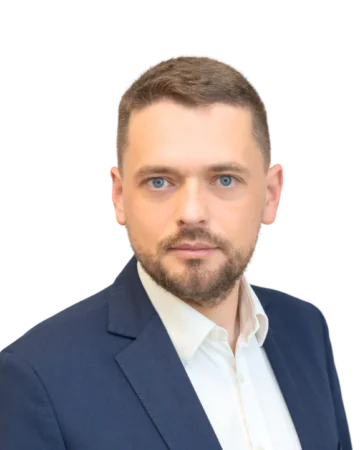
Mateusz Sawaryn
They will follow up with any questions or recommend a next step.
Quick response
We usually respond within two hours on business days.