

In many companies, work organisation does not break down suddenly. It simply grows faster than the rules.
The greatest risk usually does not come from a single error in a document, but from the gap between what the company has on paper and how people actually work.
Teams operate under several models at once. Overtime becomes the default. After-hours availability has no clear boundaries. Managers interpret the rules their own way, while HR and the board absorb more and more risk. As a result, the organisation loses predictability, consistency and time spent putting out fires that should have been sorted long ago.

Mateusz Sawaryn
Managing Partner Counsel
Our solution
We design a work model that can be defended and that can be applied
The service covers diagnosis of how work really happens, assessment of compliance and business fit, design of target rules and implementation support. Scope can be tailored to the scale of the problem – from one priority area to a full work-organisation model.
Audit of actual work organisation
- analysis of schedules, availability and daily practices
- review of overtime, on-call duty and how work is settled
- conversations about how the rules work in managerial practice
Assessment of compliance and fit of the model to the business
- verification of current rules against labour law
- assessment of fit to company scale, structure and operating rhythm
- identification of areas that are compliant but operationally ineffective
Review of working-time systems and settlement periods
- analysis of current arrangements
- recommendation of variants better fitted to the real work model
- identification of operational and organisational consequences
Ordering rules for on-site, remote, hybrid and task-based work
- availability and accountability rules
- collaboration and responsibility rules
- limits of managerial discretion
Verification of risks around overtime, on-call duty and working-time records
- identification of the highest-risk points
- assessment of correctness and clarity of current practices
- prioritisation of corrective actions
Recommendations for the target work-organisation model
- design of rules, variants and process changes
- clarifying responsibilities between HR, managers and the organisation
- translating recommendations into operational specifics
Support in implementing change
- documentation and internal regulations
- communication of changes across the organisation
- support for HR and managers when rolling out the rules
Who this service is for
For companies that no longer want to manage work "somehow"
This service is especially relevant when the organisation is already too complex to keep relying on exceptions, habits and local interpretations.

Head of People Operations / HR Manager
when working-time rules need to be ordered and implemented without chaos, excess exceptions and daily questions from managers.
HR Director / Chief People Officer
when you need to recommend a model that combines compliance, feasibility and fit to business realities.
COO / Board member responsible for operations or people
when work organisation starts to affect risk, costs, team availability and the predictability of how the company runs.
Social proof
Proof that it works in practice
We work in stages to reduce disruption for HR, managers and leadership. You can start with a diagnosis of one area or go through the entire process-from identifying the problem to stabilising new practices.
Assess actual practices and risks
We examine how the organization really works, what the documents say, what happens in practice and where the biggest gaps arise.
Design the target model
We recommend a work-organization model covering working time, availability, recordkeeping and collaboration across different arrangements.
Align documents and implementation rules
We translate the model into documents, procedures, responsibilities and decision paths.
Implement and stabilize practices
We support change communications and HR/manager collaboration, and identify issues that arise after the new rules launch.
Stages of work
A process that brings order to the topic without paralysing the organisation
We work in stages to limit chaos for HR, managers and the board. That means you can start with a diagnosis of one area or go through the full process – from recognising the problem to stabilising the new practice.
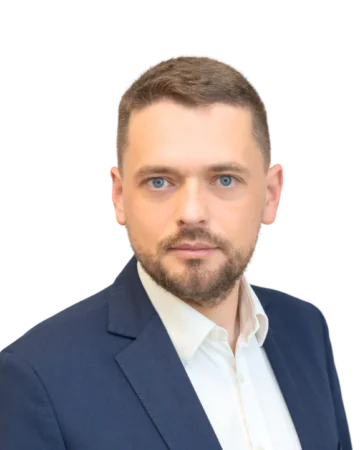
Mateusz Sawaryn
They will follow up with any questions or recommend a next step.
Quick response
We usually respond within two hours on business days.