

The company grows internationally faster than its operating rules
Relocation of a key person. Remote work from another country. Hiring a specialist who lives abroad. Secondment within a corporate group. Each of these decisions can support growth-or create risk that only surfaces later.
In practice, the topic often scatters across HR, legal, payroll, managers, headquarters, the local company and external advisers. Everyone sees a fragment. No one holds the whole. The result? Ad hoc decisions, inconsistent communication, and an international work model built on exceptions.
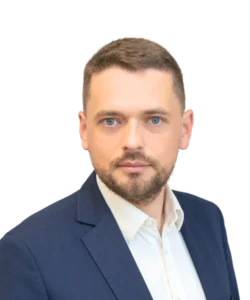
Mateusz Sawaryn
Managing Partner Counsel
Our solution
What you get exactly
We turn global mobility into a model you can implement, replicate and control
We don’t start by multiplying options. First we establish what problem the business wants to solve, which countries and people are involved, where real risk appears and what level of flexibility the company wants to keep. Only then we design a solution that can be applied in practice.
Diagnosis of the current or planned international work model
- analysis of relocation, secondment, remote work from abroad or international employment,
- identification of the countries, entities, people and departments involved,
- establishment of business objectives and operational constraints,
- recognition of current practices and process gaps.
Situation map: what the company wants to achieve, which decisions must be taken and where risks may arise.
Assessment of legal and operational risks
- assessment of risks linked to the selected cooperation model,
- identification of employment, immigration, organisational and accountability areas,
- indication of topics that need local confirmation,
- ordering of consequences for HR, managers, headquarters and local companies.
A list of key risks with their practical meaning for the business decision.
Recommendation of the target model
- comparison of possible courses of action,
- indication of the recommended solution,
- justification of the choice in the language of decision, cost, risk and implementation,
- definition of boundary conditions for the given model.
A recommendation for the board or management: which model to choose, why, and what comes next.
Rules, documents and communication
- preparation or review of documents,
- development of internal rules and procedures,
- preparation of checklists, decision criteria and communication templates,
- tailoring of materials to audiences: HR, managers, employees, contractors and local companies.
A package of materials ready to implement in the organisation.
Ordering of responsibilities between the parties
- definition of the roles of headquarters and local entities,
- identification of the process owner,
- decision and approval flow,
- ordering of contact points with payroll, legal, HR, managers and external advisers.
Accountability model: who decides, who reviews, who implements and who controls the process.
Coordination with local advisers
- indication of areas that need verification in other jurisdictions,
- support in preparing questions for local advisers,
- ordering of answers and conclusions,
- translation of local findings into a coherent process on the client side.
A list of local topics and structured input for a global or group decision.
Implementation plan and ongoing support
- sequencing of next steps,
- support for HR and managers during implementation,
- refinement of communication to people covered by mobility,
- answers to questions from the team,
- option to expand a single case into a broader framework.
A practical implementation plan that helps move from decision to action.
Who this service is for
For companies that want to develop an international work model without improvisation

HR Director - Head of People
when HR must deliver relocation, work from abroad or international hiring and needs clear rules, documents and a process.
General Counsel - Legal Counsel
when the organisation needs a recommendation that orders risks and gives the business a basis for decision.
CEO / COO / Board Member
when the company wants to scale the team or operations beyond one market, without quietly building management and operational risk.
Stages of work
How cooperation looks
Assess the model and map the situation
We gather key facts about the working model, countries, people, group structure, business goals and operational constraints. We determine whether this is a single case or a broader mobility framework.
Assess risks and select the right approach
We compare options and recommend the most practical legal and business solution. We explain the consequences and matters that need local confirmation.
Rules, documents and responsibilities
We prepare or organize documents, operating rules, responsibilities at headquarters and local entities, and communications for HR, managers and affected employees.
Implement and support
We move from recommendations to action, refine communications, answer team questions and coordinate with local advisers where needed.
Write to us
Grow the team internationally, but don't build it on exceptions
If your company is dealing with relocation, work from abroad, secondment or hiring a person in another country, it is worth ordering the model before the decision-not after the first problem.
Write briefly what the matter concerns: relocation, remote work from abroad, secondment, hiring a foreign national, cooperation with a person in another country, or ordering the whole model. The firm will come back with proposed first steps and the scope of the conversation.
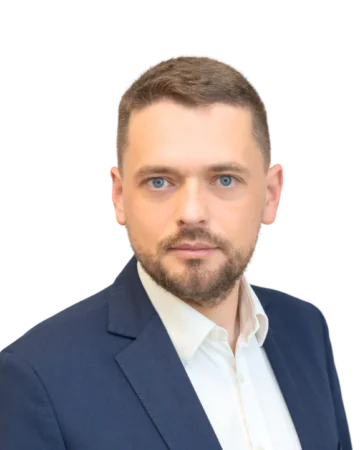
Mateusz Sawaryn
They will follow up with any questions or recommend a next step.
Quick response
We usually respond within two hours on business days.