Special Economic Zones (SEZs) are designated areas in Poland where entrepreneurs — both Polish and foreign — can operate on preferential tax terms. If you plan to invest in a SEZ, you need a support decision, must meet quantitative and qualitative criteria, and commit to maintaining the investment for a fixed period. The zones operate under current regulations until the end of December 2026, after which they will be replaced by the Polish Investment Zone.
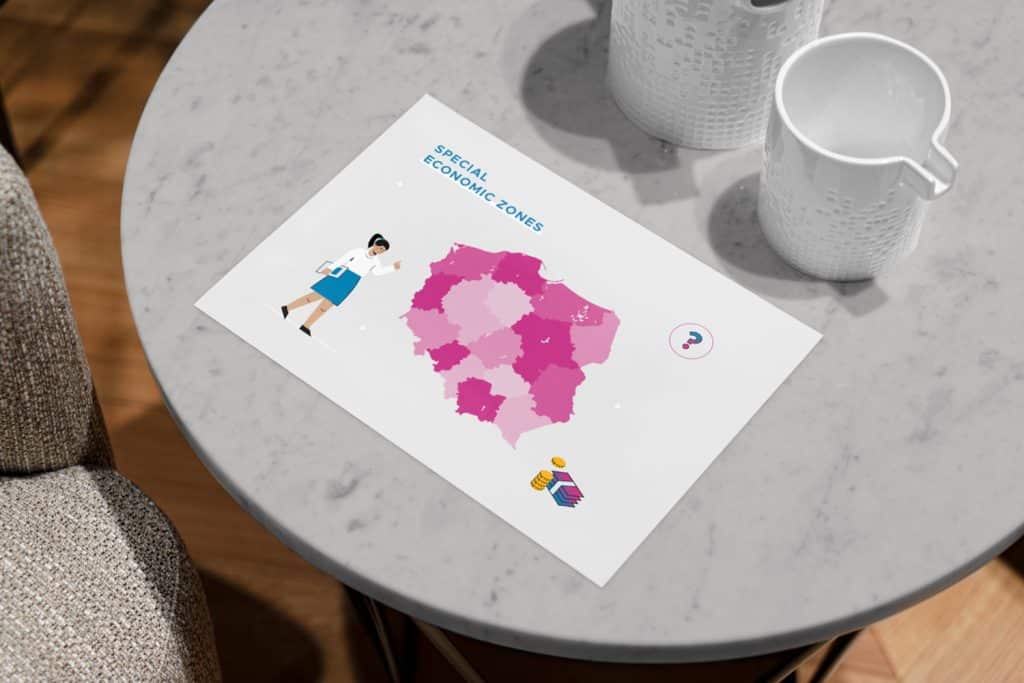
A Special Economic Zone is a separate area within Poland's territory, created to attract investment through tax incentives and infrastructure support. There are currently 14 zones in the country.
Each zone shares the same structural features:
To benefit from SEZ incentives, you need a support decision — an administrative decision that allows you to use income tax exemption up to a maximum amount specified in the decision.
Submit the application to the relevant Administrator of the area before the **implementation of the new investment begins**.
Your application must include:
Not every type of business qualifies. Restrictions come from zone ordinances and Council of Ministers regulations.
An entrepreneur operating in a SEZ under a permit can benefit from regional support in the form of tax exemption for one of two reasons:
To receive the tax exemption, you commit to:
Eligible costs include fixed assets, land purchase expenditures, construction and infrastructure costs, as well as rental/leasing of land and buildings (provided the lease period is at least 5 years, or 3 years for SMEs).
The higher the unemployment rate in the county where the investment is located, the lower the criteria to meet.
If you fail to meet the conditions and the decision is revoked, you are obliged to repay the public support received.
Obtaining the support decision alone is not enough. The zone unit must generate tax income in an appropriate amount for the relief to apply. This makes the instrument sensitive to economic fluctuations and declines in project profitability — it acts as a real investment incentive only in certain market conditions.
Within a single investment project, you can combine several sources of support: tax exemption, EU grants, subsidies, and property tax exemption. However, the total amounts are subject to aggregation and must not exceed the maximum aid intensity for your region and enterprise size.
The SEZs continue to operate under current regulations until the end of December 2026. They will be replaced by the Polish Investment Zone (PIZ), which extends the SEZ model with one major difference: entrepreneurs will be able to benefit from concessions when conducting business also outside the strictly defined area of the zone.
What is a Special Economic Zone in Poland, and what kind of tax relief can an investor get there?
A Special Economic Zone (SEZ) is a designated area within Poland where businesses — Polish and foreign — can operate on preferential tax terms. There are 14 such zones in the country. The main benefit is an income tax exemption calculated as a percentage of capital expenditures incurred or the two-year cost of hiring new employees, with the exact relief depending on investment location, company size, and the capital expenditures made.
How do you get a support decision for an investment in a Polish Special Economic Zone?
Submit your application to the Administrator of the relevant zone area before the new investment implementation begins. The application must include a financial information form, financial statements for the last three fiscal years, a business plan, and specific statements listed by the Administrator. The support decision is issued by the minister responsible for the economy and is valid for 10, 12, or 15 years depending on the public aid intensity set for the area.
What conditions does a company have to meet to qualify for SEZ tax exemption in Poland?
You must meet quantitative criteria (incurring eligible investment costs at a specified threshold tied to the local unemployment rate) and quality criteria applicable to your sector. Beyond that, you must maintain ownership of investment-related assets for at least 5 years (3 years for SMEs), keep the business running for at least 5 years from the date the investment is completed (3 years for SMEs), and fund at least 25% of total qualified costs from your own resources — failing these conditions means repaying all public support received.
Can SEZ support in Poland be combined with EU grants or other public aid?
Yes, within a single investment project you can combine tax exemption, EU grants, subsidies, and property tax exemption. However, the total amounts are subject to aggregation and must not exceed the maximum aid intensity set for your region and enterprise size.
What are the main risks or downsides of investing in a Special Economic Zone in Poland?
The support decision locks you into multi-year obligations — if your sector faces a downturn, those zone-related commitments can directly strain your liquidity. You also take on additional reporting duties and inspections (e.g., on capital expenditures or jobs created) that do not apply outside the zone, plus mandatory administrative fees for the entire period of operation. On top of that, acquiring public land within the zone requires a public tender, which extends the timeline between your investment decision and the actual transfer of property rights.